Free Shipping on All Orders60+ Healing Frequency ProgramsBacked by 40+ Published StudiesSafe for People & Pets30-Day Money Back GuaranteeFree Shipping on All Orders60+ Healing Frequency ProgramsBacked by 40+ Published StudiesSafe for People & Pets30-Day Money Back Guarantee
500+ Participant Clinical Study • 0 Adverse Effects
Your nervous system is still in survival mode. Here’s what actually reached it.
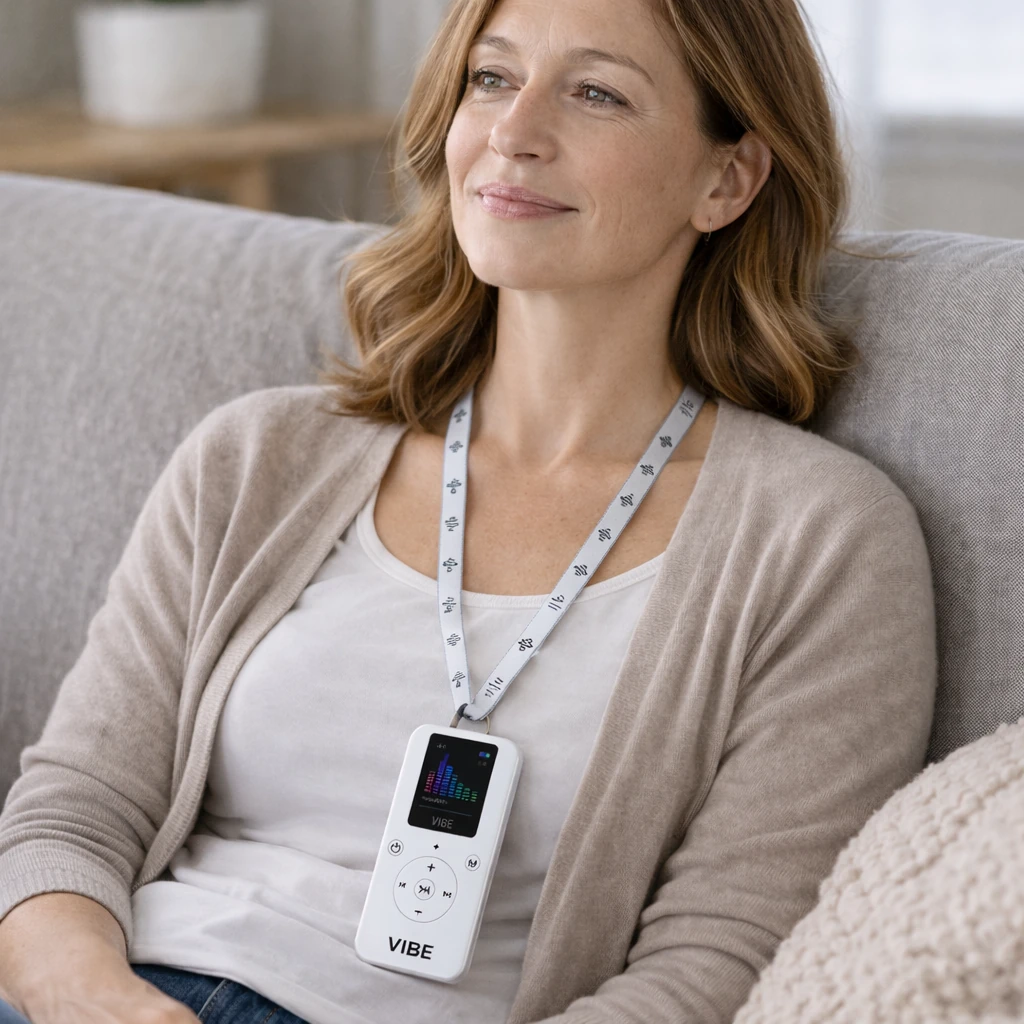
98% of study participants with PTSD and trauma reported meaningful improvement using the Vibe — a pocket PEMF device you use at home, on your schedule, without a prescription.
2 hours and 15 minutes per session, 3–4 times a week, at home
Works at the cellular level, not just the cognitive level
FDA general wellness device. No subscription. 30-day money-back guarantee.
On sale from $399. Ships in 1–2 business days. 30-day guarantee.
98%Reported meaningful improvement
500+Study participants
0.000007P-value (statistical significance)
0Adverse effects reported
You know this feeling
PTSD and trauma don’t live in your head. They live in your body.
If any of these sound familiar, you’re not imagining it. You’re not overreacting. Your nervous system learned to protect you — and it hasn’t been told it’s safe yet.
Lying awake running through it again at 2 a.m., even when you’re exhausted
A sound, a smell, or a phrase sends you back there — instantly, completely
Feeling numb or disconnected, like you’re watching yourself from the outside
You understand what happened. You’ve talked about it. But your body still hasn’t gotten the message.
Nightmares that don’t fade — waking up more tired than when you went to sleep
Pulling back from people you care about because it’s easier than explaining
This is not weakness. This is biology. The stress response that kept you alive is still running. The Vibe works at the cellular level to help your nervous system complete the cycle — the part that talking alone doesn’t always reach.
The Founder
Youngest Chief Engineer in Space Shuttle Program History
He built rocket engines for 17 years. Then he met veterans who couldn’t get the therapy that was helping them.
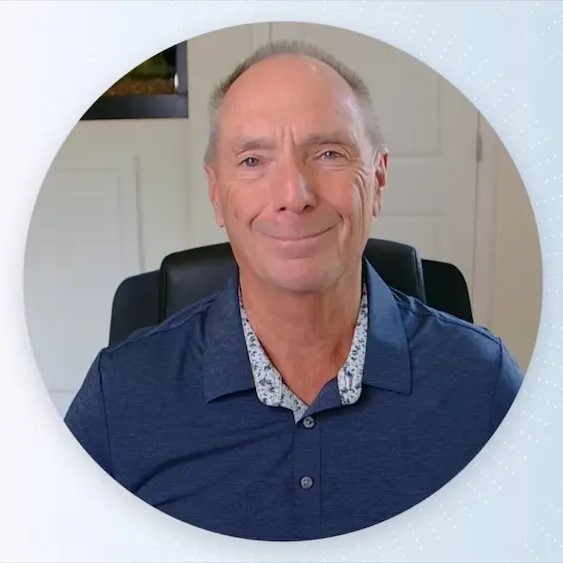
Mark Fox is not a doctor. He’s a retired aerospace engineer — the youngest Chief Engineer in Space Shuttle program history — who spent 17 years building engines for one of the most demanding programs in human history. He thinks in physics, not sentiment. When he looked at PEMF technology, he did what engineers do: he looked at the data.
What he found bothered him. PEMF therapy was showing remarkable results for PTSD and trauma — including in veterans. But the machines delivering it cost $7,000 or more, sat inside clinics, and weren’t covered by insurance. Most people who needed it simply couldn’t get it.
“So I knew there had to be a better way,” he says — and he was right. He designed the Vibe from the ground up to make clinical-grade PEMF portable, affordable, and available without a doctor’s order.
“I’ve been studying frequency therapies for about 30 years now. There’s something real here. What got me really excited was looking at the great success they were having with PTSD and trauma, but at the time, it was being held hostage in a clinical environment with expensive machines and a doctor’s office, and it usually wasn’t covered by insurance. So most people couldn’t afford it or get access to the therapy. So I knew there had to be a better way to design an affordable, pocket-sized device that everyone could have access to.” — Mark Fox, Founder, Resona Health
4.9/5 from 500+ reviews
Backed by 40+ published studies
FDA general wellness device
30-day money-back guarantee
Free shipping
Why it’s so hard to move on
Trauma doesn’t end when the event does. Here’s what’s actually happening in your body.
Understanding this changes how you approach recovery — and why some approaches reach the problem and others don’t.
When something threatening happens, your nervous system activates a survival response: heart rate surges, hormones flood your body, attention narrows to the danger. That response is supposed to switch off once the threat passes.
In PTSD and trauma, it doesn’t fully switch off. The nervous system stays in a state of heightened alert — not because you’re choosing to, not because you’re weak, but because the cellular “off switch” didn’t complete its cycle. The body stored the threat response before it could be discharged.
This matters because it explains why cognitive approaches — talk therapy, journaling, understanding your triggers — can get you so far and then stop. You’ve changed the narrative. Your cells haven’t gotten the update.
The vagus nerve runs from your brainstem down through your chest and abdomen. It’s the primary pathway for the “rest and digest” signal — the one that tells your nervous system it’s safe. In chronic trauma, vagal tone weakens. The calming signal gets quieter. The survival signal stays louder.
What’s stuck
The hypothalamic-pituitary-adrenal axis stays in a partial activation state. Stress hormones remain elevated. Sleep, digestion, emotional regulation, and immune function all pay a price. This is not psychological — it is physiological.
What needs to change
The cells themselves need a signal that reorganizes their electrical state — something that works at the level of membrane voltage and ion channel activity. That’s not a conversation. It’s physics. And physics is exactly what PEMF delivers.
The mechanism
PEMF works the way your body already works — just at the right frequency.
PEMF stands for Pulsed Electromagnetic Field. It delivers brief, targeted pulses of electromagnetic energy that pass harmlessly through tissue and interact with the water and ions in your cells — the same way Earth’s natural magnetic field does.
Your cells run on electrical charge. When they’re healthy, they maintain a stable membrane voltage. When they’re stressed — whether from trauma, injury, or chronic nervous system dysregulation — that voltage drops. The cell stops communicating efficiently with its neighbors. Recovery slows. Pain persists. The “off switch” for the stress response stops working properly.
PEMF restores the electrical environment the cell needs to function. Mark describes it simply: it recharges the cell’s batteries. Not metaphorically — the ion exchange across the cell membrane literally improves with correctly targeted electromagnetic stimulation.
The Vibe’s PTSD protocol runs at frequencies specifically tuned for nervous system regulation, including the vagus nerve. The 7.83 Hz Earth frequency protocol mirrors the Schumann resonance — the electromagnetic field your nervous system evolved alongside for millions of years.
30,000+
Published PEMF papers
600+
Peer-reviewed on PubMed
1970s
NASA using PEMF since
100,000×
Less energy than a cell phone
Why Resona
Not all PEMF devices are the same. This one was built for PTSD.
Single-frequency consumer PEMF devices pulse at one fixed frequency. That’s like tuning one radio station and leaving it there. The Vibe delivers multi-frequency protocols designed for specific conditions — starting with PTSD and trauma.
60+ targeted protocols
Including dedicated PTSD, Vagus Nerve, and Earth 7.83 Hz protocols. Not a one-size device.
Study-backed results
500+ participants. 98% reported meaningful improvement. 66% exceeded the VA’s threshold for clinically significant change. The data exists.
$299 vs. $7,000
Clinical PEMF machines cost $7,000 or more and aren’t covered by insurance. The Vibe puts the same therapy in your pocket.
No subscriptions. Ever.
You buy it once. You own it. No monthly fees, no locked protocols, no expiring plans.
Resona Health
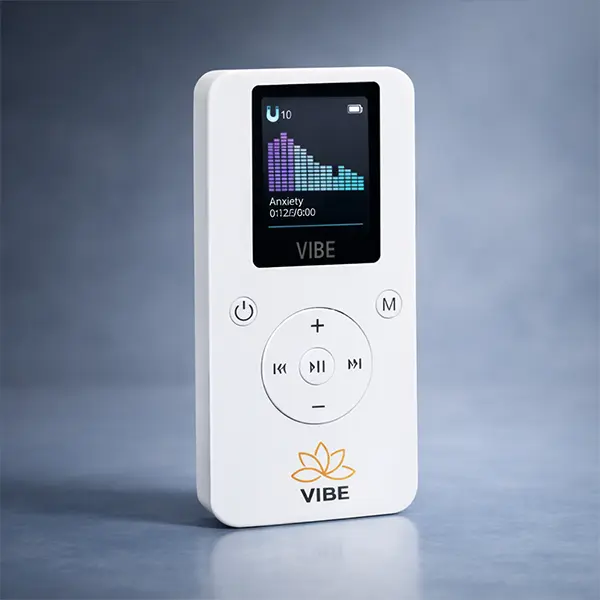
The Vibe
Pocket PEMF for PTSD and trauma recovery
(500+ verified reviews)
$299$399Save $100
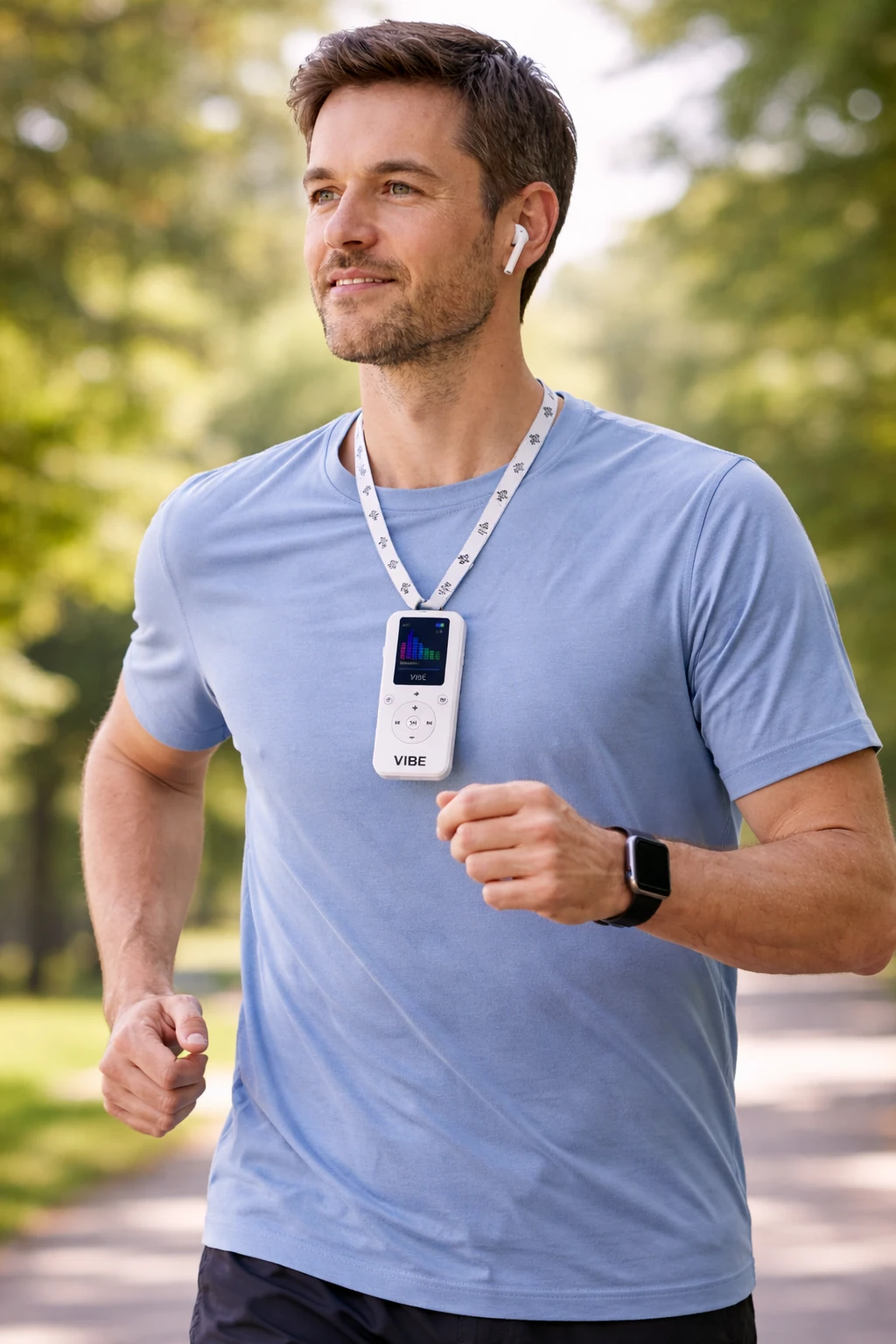
2.4 oz — fits in a shirt pocket
PTSD Protocol: 2 hours and 15 minutes per session
Brain Wave Alpha and Theta protocols (vagus-nerve toning)
Try it for 30 days. If it’s not helping, return it for a full refund — no questions asked.
From study participants
What 500+ people said after 30 days
These are not marketing testimonials. These are from the ongoing at-home PTSD study. Participants’ own words.
“My overall symptoms have decreased. The amount, intensity, duration and frequency of flashbacks are noticeably less. With the decrease in PTSD episodes, I’ve also had a decrease in chronic pain and flare ups. I’m able to cope with overwhelming feelings triggered by PTSD. I’m able to leave those negative moments instead of dwelling on the negative thoughts and memories.”
— J.S., Study Participant
“I am starting to feel better and be more outgoing. The nightmares are down big time and I have been keeping track. I did not use it for two days to try to see and I had a nightmare on the second night. I am telling you this is changing my life.”
— R.S., Study Participant
“I’ve felt a significant improvement in emotional balance — decreased emotional reactivity, less fear, anger and oversensitivity — resulting in increased calmness and confidence. I’ve also noted an improvement in mental clarity and focus.”
— A.D.R., Study Participant
“The Vibe helped calm my anxiety and excessive worrying. It provided a relaxing experience after each session.”
— K.A.T., Study Participant
“It really seemed to slow my thinking down, to where I could concentrate better.”
— B.C.F., Study Participant
“I started to feel better after the 1st session.”
— B.E., Study Participant
“For millions affected by PTSD and trauma, finding relief can feel impossible — but one innovative approach is a new, powerful tool. The Vibe PEMF device — a revolutionary therapy in the palm of your hand. With Vibe, self-care doesn’t require a prescription, high cost, or a clinic visit. It’s in your pocket, helping you feel better — naturally and effectively.”
Samuel L. Jackson Public service announcement. Not a paid endorsement.
No clinic. No appointment. No equipment beyond the device. Here’s exactly what you do.
1
Start your session well hydrated
PEMF works through your body’s water, so it works best when you’re well hydrated. No need to force down a set amount. Just drink water normally through your day. It still works either way.
2
Select the PTSD protocol on the device
Power on the Vibe and navigate to the PTSD protocol. Your quick start guide walks through this in under two minutes. Most people have it memorized by their second session.
3
Place the device on your body and start the session
The Vibe runs for 2 hours and 15 minutes. You can sit, lie down, or go about a quiet activity. You’ll feel gentle warmth from the device. That’s normal — it’s operating correctly.
4
Repeat 3–4 times per week for 30 days
The study protocol was 3–4 sessions per week. Most participants saw measurable change on their PCL-5 scores within the first 30 days. Some reported improvement after their first session.
5
Add the Brain Wave Alpha, Theta, and Earth 7.83 Hz protocols
After establishing your PTSD protocol routine, many participants layer in the Brain Wave Alpha and Theta protocols, run in sequence to tone the vagus nerve and deepen nervous system regulation, plus the Earth 7.83 Hz protocol for grounding. These are included, no extra cost.
What to expect: The device gets warm during operation — this is normal and expected. You will not feel electric stimulation. Most people describe sessions as relaxing. If you experience any discomfort, stop and contact support.
The data
What the study found — and why the numbers matter
This is an ongoing at-home study. These are real people, measured on the same scale the VA uses to assess PTSD severity.
98%
Reported meaningful improvement
66%
Exceeded VA’s threshold for clinically significant improvement
0
Adverse effects reported
Measure
Result
What it means
Study participants
500+ (ongoing)
At-home use study, real-world conditions
Reported meaningful improvement
98%
Self-reported improvement in PTSD symptoms
PCL-5 reduction >11 points
66%
Exceeds VA threshold for clinically significant improvement
Mean PCL-5 before
54.57
Moderate-to-severe PTSD range at baseline
Mean PCL-5 after
30.48
24-point average reduction across participants
Statistical significance (p-value)
0.000007
Far below the 0.05 threshold — result is not random
Adverse effects
0 reported
No negative effects reported across all participants
Protocol used in study: PTSD protocol, 3–4 sessions per week, 30 days, 1 liter of water consumed in the 4 hours before each session.
PEMF as a field has over 30,000 published papers and 600+ peer-reviewed studies indexed on PubMed. The technology has been in use since the 1970s — including by NASA to address bone density loss and cellular degeneration in astronauts. The Vibe’s protocols are built on this body of research.
This is not a replacement for therapy or medical care. It’s something most approaches can’t do alone: work directly at the cellular level.
Approach
What it does well
What it doesn’t reach directly
Works with Vibe?
Talk therapy (CBT, EMDR)
Reframes the narrative. Processes memory and meaning.
Cellular stress state, autonomic dysregulation
Yes — many use both
Medication (SSRIs, etc.)
Modulates neurotransmitter levels. Can reduce acute symptoms.
Underlying cellular electrical state
Yes — consult your provider
Breathwork & meditation
Activates vagal tone. Builds self-regulation skills over time.
Can be hard to access when system is activated
Yes — complements well
Somatic therapy
Addresses body-held trauma. Works below the cognitive level.
Requires skilled practitioner, ongoing access
Yes — same philosophy
Vibe PEMF
Works at cellular level. Supports nervous system regulation. At home, on your schedule.
Not a replacement for professional support
Works alongside all of the above
The Vibe does something the others don’t reach directly: it delivers a physical signal to the cells themselves. Talk therapy can change what you believe about what happened. The Vibe can change how your cells are responding to it. Most people find the two approaches reinforce each other.
Common questions
Frequently asked questions
Which protocols on the Vibe support PTSD and trauma recovery?
Start with the PTSD Protocol (2 hours and 15 minutes, the one used in the 500+ participant study). From there, layer in the protocols that work together for trauma and the anxiety that rides alongside it: Anxiety, Relax and Balance, and the Brain Wave Alpha then Theta sequence, which tones the vagus nerve and settles an overactive nervous system. Many users also add Earth 7.83 Hz for grounding (it mirrors the Schumann resonance, the natural frequency that has surrounded life on Earth throughout its evolution). There is no one-size-fits-all. Begin with one and build from there. All are loaded on the device at no extra cost.
How long before I notice a difference?
Some participants in the study reported improvement after their first session. The study protocol was 30 days at 3–4 sessions per week — that’s the timeframe in which 98% of participants reported meaningful improvement. Results vary by individual. If you reach 30 days without noticing a change, contact us for a full refund under the money-back guarantee.
What does a session actually feel like?
Most people describe it as relaxing — a gentle warmth from the device, a quieting of mental noise. You won’t feel an electric current or any sharp sensation. The device gets noticeably warm during operation; that’s expected and indicates it’s working. Many users do sessions in the evening while reading or lying down, or in the morning before the day begins.
Can I use the Vibe alongside medication or therapy?
Yes. The Vibe is used alongside medication, therapy, and other wellness practices. It’s not a drug and does not interact with medications in a pharmacological way. That said, if you’re under the care of a physician or mental health provider, let them know you’re adding a PEMF device to your routine — they may want to track changes with you. The Vibe is an FDA general wellness device, not a medical treatment.
What is the PCL-5 and why does it matter?
The PCL-5 (PTSD Checklist for DSM-5) is a 20-item self-report questionnaire used by the VA and clinical researchers to measure PTSD symptom severity. Scores range from 0–80. A score above 33 typically indicates probable PTSD. In the Resona study, the mean starting score was 54.57 — moderate-to-severe range. After the protocol, the mean dropped to 30.48 — an average reduction of 24 points. The VA considers a reduction of more than 11 points clinically significant. 66% of study participants exceeded that threshold.
Is this a medical treatment for PTSD?
No. The Vibe is an FDA general wellness device, not a medical device cleared to diagnose, treat, cure, or prevent any disease. It is not a substitute for professional mental health treatment. The study data reflects self-reported outcomes and PCL-5 scores from at-home users — it is not a clinical trial conducted in a controlled medical setting. If you have PTSD, please work with a qualified healthcare provider.
How is the Vibe different from other PEMF devices?
Most consumer PEMF devices deliver a single fixed frequency — useful for general wellness, but not optimized for specific conditions. The Vibe delivers multi-frequency protocols, each designed for a different physiological target. It also has the only published at-home PTSD study in consumer PEMF — 500+ participants, p-value of 0.000007. Other devices may use similar technology; very few have results data behind specific protocols. Mark Fox built the Vibe starting with the PTSD application, not as an afterthought to a general-purpose device.
What is the 30-day money-back guarantee?
If you try the Vibe for 30 days and it’s not helping, return it for a full refund. No questions asked. We cover return shipping. You are not out the cost of finding out whether this works for you — that risk is ours. The guarantee starts on the date of delivery.
Do I need a subscription or app?
No. The Vibe is a standalone device. No app required, no monthly subscription, no protocol updates that get locked behind a paywall. All 60+ protocols are loaded on the device. You buy it once and it’s yours.
Is PEMF safe? What about the electromagnetic exposure?
PEMF has a 50+ year safety record with over 30,000 published papers and no credible evidence of harm when used as directed. The Vibe operates at 100,000 times less energy than a cell phone. For comparison: your cell phone regularly penetrates your skull; the Vibe interacts with the water in your tissue at a fraction of that energy level. PEMF is contraindicated for people with implanted electrical devices (pacemakers, cochlear implants), during pregnancy, and in active cancer treatment — consult your physician if any of these apply.
★
30-Day Money-Back Guarantee
Try the Vibe at home for 30 full days. Use the PTSD protocol 3–4 times a week. If you don’t notice a difference, return it for a complete refund — no forms, no questions, no hassle. We cover return shipping.
We offer this because we’ve seen the study data. We know what it does for most people. And we’d rather carry the risk than have you go without something that might change how you feel every day.
A note from Mark
“I’m an engineer. I spent 17 years building rocket engines. I don’t have a medical degree, and I won’t pretend otherwise. What I have is 30 years studying frequency therapies and the willingness to take what the data shows seriously when most people in my field haven’t. The veterans I met who were getting better with PEMF — they’re the reason this device exists. They couldn’t afford the clinic. I thought that was unacceptable. I still do. If you’re reading this because you’re struggling, I hope you’ll try it. And if it doesn’t work for you, we’ll give you your money back.”
Mark Fox
Founder, Resona Health • Youngest Chief Engineer in Space Shuttle Program History
Everything you need
The Vibe — $299
One purchase. Everything included. No add-ons, no subscriptions, no follow-up fees.
Return it within 30 days for a full refund. We cover shipping both ways. You will not be out anything for finding out whether it helps you. That’s the point of the guarantee — remove the financial risk so you can actually try it.
When will it arrive?
Ships in 1–2 business days with free standard shipping. A tracking number is sent when your order ships. Expedited options available at checkout. You’ll receive a tracking number as soon as your order ships.
Can I use it if I’m in therapy or on medication?
Yes. The Vibe works alongside other approaches — it doesn’t interfere with therapy, and it’s not a drug, so there’s no pharmacological interaction with medication. Let your provider know you’re adding it. Many find it complements what they’re already doing.
These statements have not been evaluated by the Food and Drug Administration. This product is not intended to diagnose, treat, cure, or prevent any disease. This content is for informational purposes only and is not intended as medical advice. Please consult with a qualified healthcare professional before beginning any new therapy. Individual results may vary. All Resona Health products are FDA general wellness devices.



 4.9/5 from 500+ reviews
 Backed by 40+ published studies
 FDA general wellness device
 30-day money-back guarantee
 Free shipping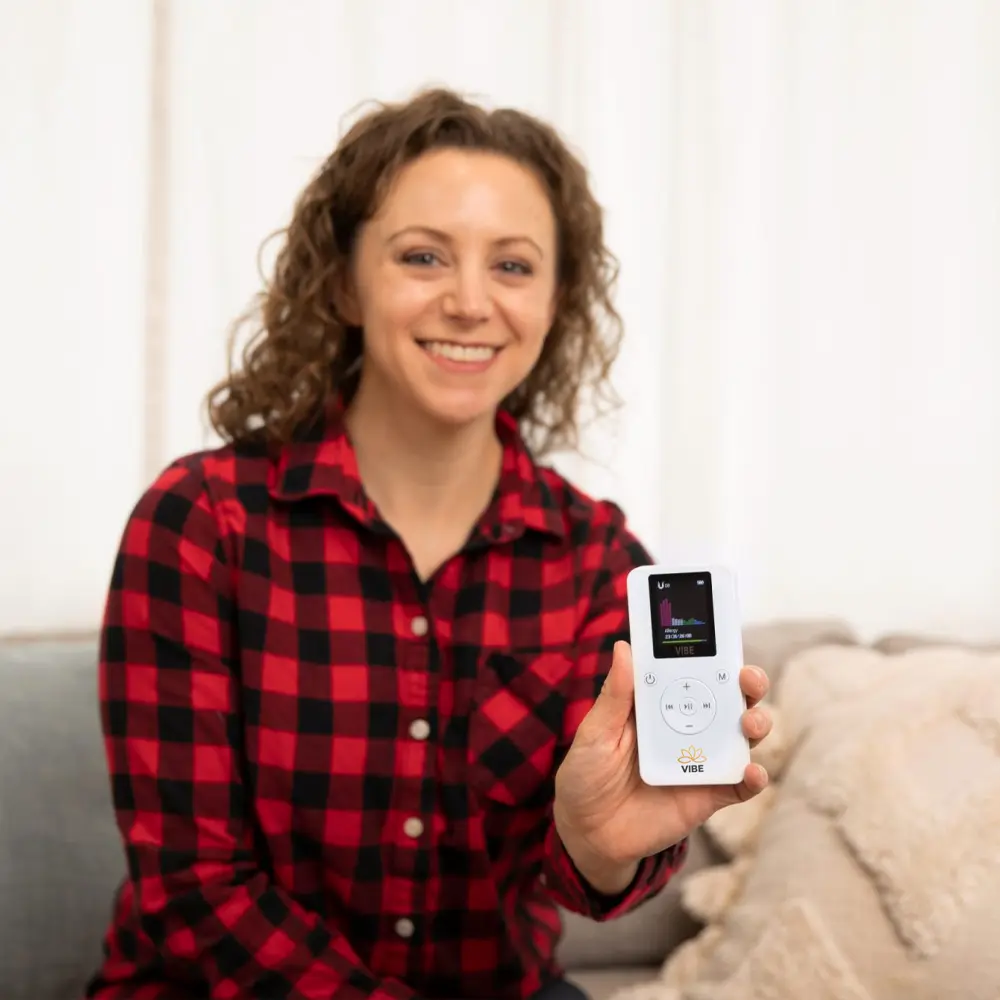



 Try it for 30 days. If it’s not helping, return it for a full refund — no questions asked.