Track Pain Reduction With The Kario Wellness Watch
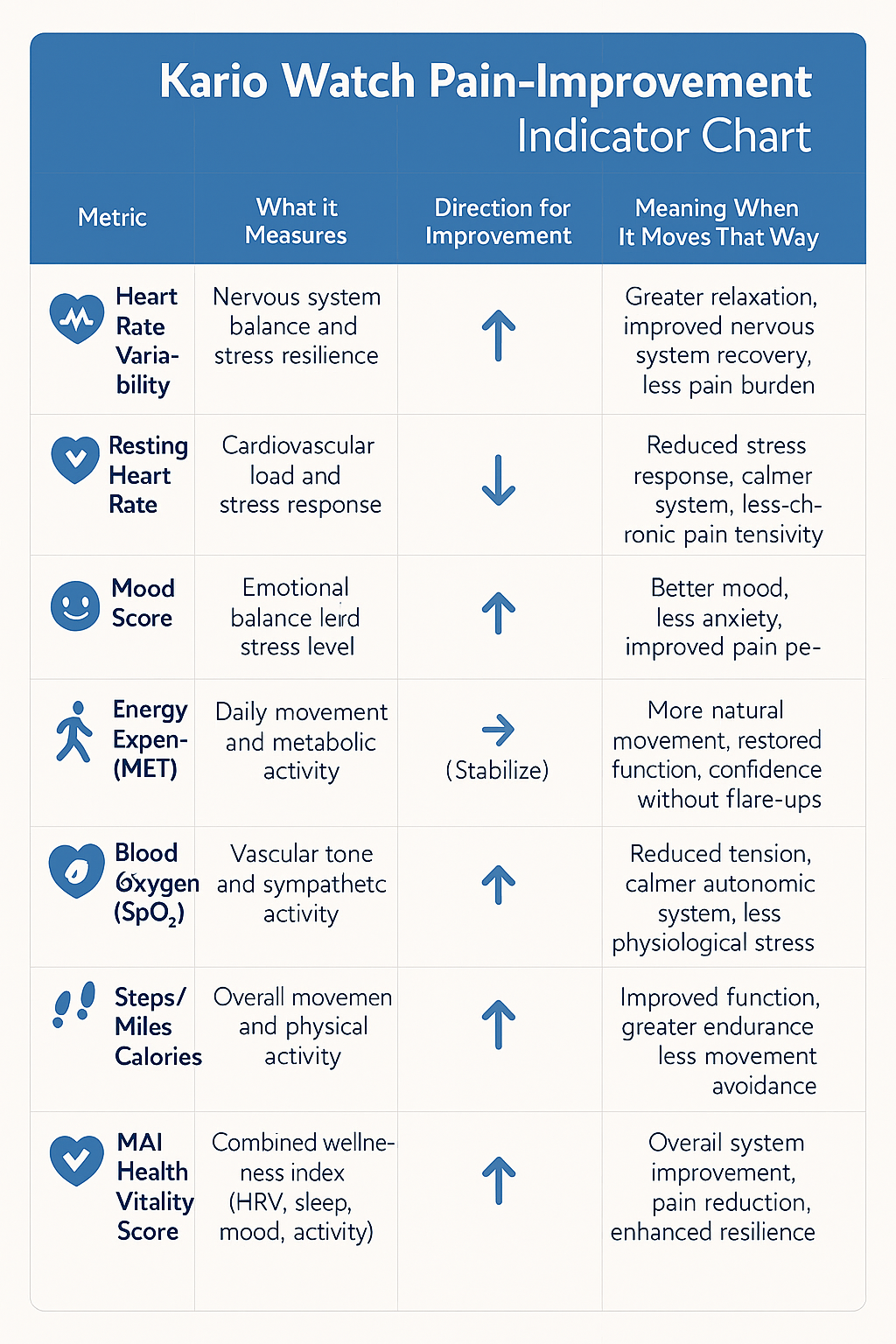
Wearable technology has come a long way from simply counting steps. The Kario Wellness Watch is designed to give you a real-time window into your body’s wellness signals — and many of its measures can be used to monitor changes that often accompany a reduction in pain.
Pain isn’t just a localized sensation — it’s a whole-body event involving your nervous system, sleep, mood, and metabolic balance. The Kario Watch gives you a way to observe these internal shifts over time. Here’s how each of its features can help you see whether your body is truly moving toward less pain and better recovery.
Heart Rate Variability (HRV)
HRV measures the variation in time between your heartbeats — a key indicator of nervous system balance. When you’re in pain or under stress, HRV tends to drop as your body shifts into “fight or flight” mode.
When pain levels improve, HRV usually rises, showing that your nervous system is regaining flexibility and resilience. Tracking HRV daily, especially in the morning, can reveal long-term trends toward healing and relaxation.
Heart Rate
Pain can raise your resting heart rate by activating the stress response. As pain subsides and your body relaxes, your resting heart rate often lowers.
If you notice your resting pulse gradually decreasing while you feel less discomfort, that’s a strong sign of improved recovery and reduced tension.
Sleep Quality
Poor sleep and pain form a vicious cycle — pain interrupts deep rest, and lack of restorative sleep makes pain worse.
As your pain lessens, you’ll often see longer, more stable sleep cycles and fewer nighttime awakenings. The Kario Watch’s sleep tracking lets you see how often you reach deep sleep, which is where tissue repair and nervous system recovery occur.
Mood Tracking
Pain doesn’t just live in the body — it affects your emotions too. Chronic pain often brings stress, frustration, and anxiety, all of which can worsen pain sensitivity.
Improving mood and reduced pain often go hand in hand. The Kario’s mood tracking helps you notice when your emotional state is improving, reinforcing the progress you’re making physically.
Energy Expenditure (MET)
Pain tends to make people move less. When your pain is improving, you’ll find it easier and more natural to be active again.
The Kario Watch’s MET and calorie metrics track how much energy you’re expending through movement. A gradual, sustained increase in your daily activity — without flare-ups — is one of the clearest signs your pain is subsiding and your confidence in movement is returning.
Blood Pressure
Chronic pain often keeps the body in a state of heightened tension, which can elevate blood pressure. As pain decreases, blood pressure trends may stabilize or drift lower, reflecting reduced stress on your cardiovascular system.
The Kario’s estimates aren’t a medical reading, but they provide a valuable trend line to show whether your system is calming over time.
Blood Oxygen (SpO₂)
Good oxygenation supports tissue healing, sleep, and energy — all essential for recovery. While SpO₂ levels don’t directly measure pain, consistently healthy oxygen levels can indicate that your body is functioning smoothly, allowing better recovery and resilience.
Blood Glucose Patterns
Large swings in blood sugar can increase inflammation and pain sensitivity. The Kario Watch helps you stay aware of your glucose patterns so you can maintain better metabolic balance.
More stable glucose trends often coincide with steadier energy, reduced inflammation, and improved pain tolerance.
Steps, Miles, and Calories
Pain limits motion — recovery restores it. As your pain improves, you’ll usually see your daily step count and total movement rise naturally.
Watching your step or calorie trends climb without a corresponding increase in pain is one of the best confirmations that your body is regaining strength and function.
MAI Health Vitality Score
The Kario Watch brings all of these data points together into a single Vitality Score — a snapshot of your overall well-being.
When that score rises steadily alongside your own reports of less pain and more energy, it’s a clear signal that your body is moving in the right direction.
How to Use These Metrics to Track Pain Reduction
-
Establish Your Baseline
Track your pain levels daily for a week or two while collecting your Kario data. This gives you a clear starting point. -
Start Your Therapy or Wellness Routine
Whether you’re using PEMF, light therapy, or another intervention, continue collecting the same data while noting how your pain feels. -
Watch for Patterns
Look for steady improvements: higher HRV, better sleep, improved mood, more movement, and a rising Vitality Score. These trends together are much more powerful than any single number. -
Respond to the Data
If metrics start to decline or pain returns, it’s your cue to rest, recover, or adjust your therapy plan before pain flares up again.
The Takeaway
Pain reduction is a journey — and the Kario Wellness Watch can be your guide. By translating complex physiological signals into clear, trackable data, it helps you see what your body already knows: when stress is fading, sleep is deepening, movement is returning, and balance is being restored.
Use your Kario Watch as your daily feedback partner — not just to measure health, but to witness your recovery in real time.